An Indian home does not face one neat, predictable season. For instance, summer bakes the façade, while monsoon rain finds weak corners. Meanwhile, humidity encourages damp patches, and airborne dust slowly dulls the colour.
Therefore, choosing the best exterior wall paint is less about picking a fashionable shade. It is more about building a sensible protective system around the house.
That system matters because the outside surface creates a home’s first impression. More importantly, it takes the first hit from the weather. For instance, a poor choice may look fresh initially. But it may start showing stains, fading, peeling, or dampness sooner than expected.
So, colour is only one part of the decision. Preparation, local climate, surface condition, finish, and application quality matter just as much.
1. Begin With The Weather Around Your Home

Obviously, India has multiple climatic zones. So, a paint that performs well in a relatively dry inland city may face very different pressures near the coast. Similarly, a west-facing wall in Rajasthan receives a kind of heat that a shaded façade in Assam simply does not.
Consequently, homeowners should study the immediate surroundings before comparing products. It is important to observe:
- How much direct sunlight do the walls receive
- Whether rainwater repeatedly strikes one side
- Whether nearby trees or buildings keep sections damp.
Also check the following factors:
- Pollution
- Salt-laden coastal air
- Traffic dust
- Seasonal temperature changes.
A suitable exterior paint for Indian climate conditions should match the actual location. It must not merely be a broad idea of “all-season performance”. Although this is obvious, homeowners miss it when the shade card becomes the main event.
| Local Condition | Main Exterior Concern | Practical Paint Priority |
| Hot, dry region | Fading, surface heating, fine cracking | Heat and UV resistance with stable colour |
| Heavy-rainfall region | Dampness, peeling, fungal growth | Strong water resistance and correct priming |
| Coastal location | Humidity, salt exposure, recurring moisture | Moisture protection and a robust paint system |
| Polluted urban area | Dust deposits, stains, dull appearance | Washable or easier-to-maintain finish |
| Mixed seasonal climate | Heat, rain, humidity, temperature shifts | Balanced all-weather protection |
Which Exterior Paint Colour Is Practical For Hot Regions?
Usually, lighter neutrals and muted earthy shades handle intense visual brightness better. They also give the façade a calmer, cooler appearance.
Is It Possible To Apply Exterior Paint During The Monsoon?
Avoid painting during rain or on damp walls. Rather, choose a dry weather window. Also, follow the product’s stated application conditions.
2. Look Beyond The Tin And Examine The Wall
Paint cannot quietly repair every construction defect underneath it. In fact, even a premium coating may struggle if plaster has –
- Cracks
- Loose particles
- Trapped moisture
- Uneven texture.
So, check the wall before discussing colours or finishes.
- Run your hand across the surface.
- Look for the following issues:
- Powdering
- Flaking
- Dark moisture marks
- Hairline cracks
- Algae
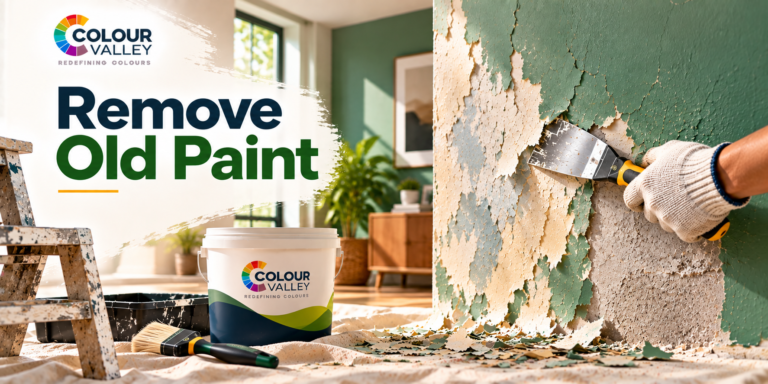
- Hollow plaster.
- Inspect the following areas:
- Parapets
- Pipe joints
- Window ledges
- Roof-wall junctions.
In general, these areas allow water to enter, even if the visible stain appears elsewhere.
For uneven, paint-ready surfaces, Colour Valley X1-Putty Acrylic Wall Putty can form part of the preparation process. However, putty should not become a cosmetic cover for active leakage. Therefore, identify and correct the moisture source. Otherwise, the same old patch may return after the next spell of rain.
Should Cracks Be Covered Directly With Paint?
No, do not cover cracks directly with paint. Instead, do the following:
- Identify the cause
- Repair the cracks appropriately
- Prepare the surface before applying primer and the selected topcoat.
3. Understand The Full Exterior Painting System
The best exterior wall paint cannot perform properly when the layers beneath it remain weak. Exterior painting works as a system:
- Repaired masonry
- Suitable putty where required
- Primer
- The specified topcoats.
Skipping a layer to reduce immediate costs will lead to higher repainting costs later.

In those cases, primer is particularly important. This is because it supports adhesion and helps create a more consistent base.
Colour Valley X One Gold Waterproof Exterior Wall Primer is relevant where homeowners need a purpose-made exterior primer within the recommended painting system. Nevertheless, the wall must be dry, stable, and properly prepared before application.
The topcoat then provides the visible colour and exposed protective surface. At this stage, homeowners might consider Colour Valley Xterio 7X All Weather for exterior weather protection.
However, select and apply any product according to the current label instructions. Guidance from a trained painter or authorised dealer may also help.
Is Exterior Primer Really Necessary?
Of course. A suitable primer does the following:
- Supports adhesion
- Creates a better base
- Helps the topcoat deliver a more even, dependable finish.
Which Colour Valley Products Suit Exterior Wall Painting?
Colour Valley offers exterior primers and finishes. These include X One Gold Waterproof Exterior Wall Primer and Xterio 7X All Weather.
4. Match The Paint To The Dominant Seasonal Problem
In very warm regions, exterior paint should resist prolonged sunlight and repeated heating. Lighter shades are mostly practical options. This is because they create a visually cooler façade. Also, they show fading less dramatically than certain deep, intense colours.
Monsoon-heavy locations need a different emphasis. When selecting an exterior paint for monsoon conditions, prioritise –
- Water protection
- Firm adhesion
- Careful detailing around cracks and ledges.
However, painting during active rain or over a damp substrate might undermine the work before the coating settles properly.
Likewise, weather-resistant exterior paint should not be mistaken for permission to ignore drainage. For instance, the following issues can keep attacking the building:
- Clogged pipes
- Flat window projections
- Damaged roof edges
- Water collecting near the plinth.
Although paint helps defend the surface, basic architectural maintenance must support it.
5. Choose The Finish With The Architecture In Mind
Finish influences more than shine. It changes how colour, light, wall texture, and architectural details behave together.
For instance, a high-sheen surface may make mouldings or selected façade elements stand out. Meanwhile, it might also reveal uneven plaster more readily. In general, a restrained finish appears calmer across broad wall areas.
Colour Valley Xterio Pure Glow High Sheen Emulsion may suit homeowners seeking a noticeable, polished exterior character.
Meanwhile, Xterio High Gloss PU Emulsion works where a higher-gloss visual treatment and easier cleaning are relevant.
However, always check product suitability for the specific substrate and intended application.
Rather than coating every surface with the same visual intensity, use the finish strategically. For example, a calmer main wall can support a more defined entrance frame, balcony band, or architectural border.
This way, the result looks considered. Although that difference is small on paper, it is rather obvious once the house is painted.
6. Select Colours Under Real Outdoor Light
Although shade cards are useful, they do not reproduce the scale and brightness of an exterior wall. Sunlight can make colours appear lighter, but shade may pull out grey, blue, or muddy undertones that went unnoticed indoors.
So yes, that tiny swatch can be misleading.

Apply sample patches on at least two differently oriented walls. Also, observe them in morning, afternoon, and overcast light. Moreover, view the samples from the road or entrance gate. Usually, exterior colour is experienced from a distance, not with one’s nose almost touching the plaster.
For the best exterior paint for home design, connect the palette with fixed materials such as –
- Stone cladding
- Roof tiles
- Window frames
- Gates
- Railings
- Driveway paving.
In general, warm neutrals work well with earthy stone. Meanwhile, cooler greys mostly complement black metalwork and contemporary geometry.
So, keep the number of major colours controlled. A practical palette may include:
- One primary colour for the largest wall areas.
- A secondary shade for projections, bands, or balconies.
- One contrasting accent for the entrance or limited details.
This approach creates hierarchy. More importantly, it lets the architecture speak. In fact, too many unrelated colours fragment a compact house. It also makes its elevation look busier than it actually is.
How To Test An Exterior Colour?
First, paint a sizeable sample on differently oriented walls. Then, observe it in sunlight, shade, and overcast conditions before deciding.
Where Can I Buy Colour Valley Exterior Paints?
To buy Colour Valley Exterior Paints, visit cvalley.in. You can also ask for suitable Colour Valley products at a nearby authorised dealer or hardware store.
7. Judge Durability Through Preparation And Application
The topcoat alone is not enough for a durable exterior wall paint. For instance, during application, the following factors influence how the final work performs:
- Surface cleaning
- Crack repair
- Drying time
- Primer compatibility
- Coat thickness
- Weather.
In other words, workmanship remains part of the product decision.
So, ask the painter the following questions:
- How loose paint will be removed.
- Which primer will be used.
- Whether moisture has been checked.
Also discuss the number of coats according to –
- Product guidance.
- Preparation around windows.
- Protection of adjacent surfaces.
Usually, a detailed estimate is more useful than a suspiciously low lump-sum quotation.
In addition, if storage instructions permit, always retain the following data:
- Product names
- Batch details
- Shade codes
- A small quantity of leftover paint.
This makes future touch-ups easier, particularly around repaired pipes, electrical work, or small façade alterations.
The Right Paint Choice Starts Beneath The Colour
Ultimately, the best exterior wall paint is the one selected for the home’s climate, wall condition, architecture, and maintenance expectations.
- Begin with repairs
- Build the right primer-and-topcoat system
- Test colours outdoors
- Insist on careful application.
The façade will then feel designed while remaining better prepared for India’s changing seasons.
For suitable primers, weather-protection coatings, and exterior finishes, explore Colour Valley Exterior Paints. You may also consult a Colour Valley dealer or experienced painting professional. This will help you finalise the product system for your home.